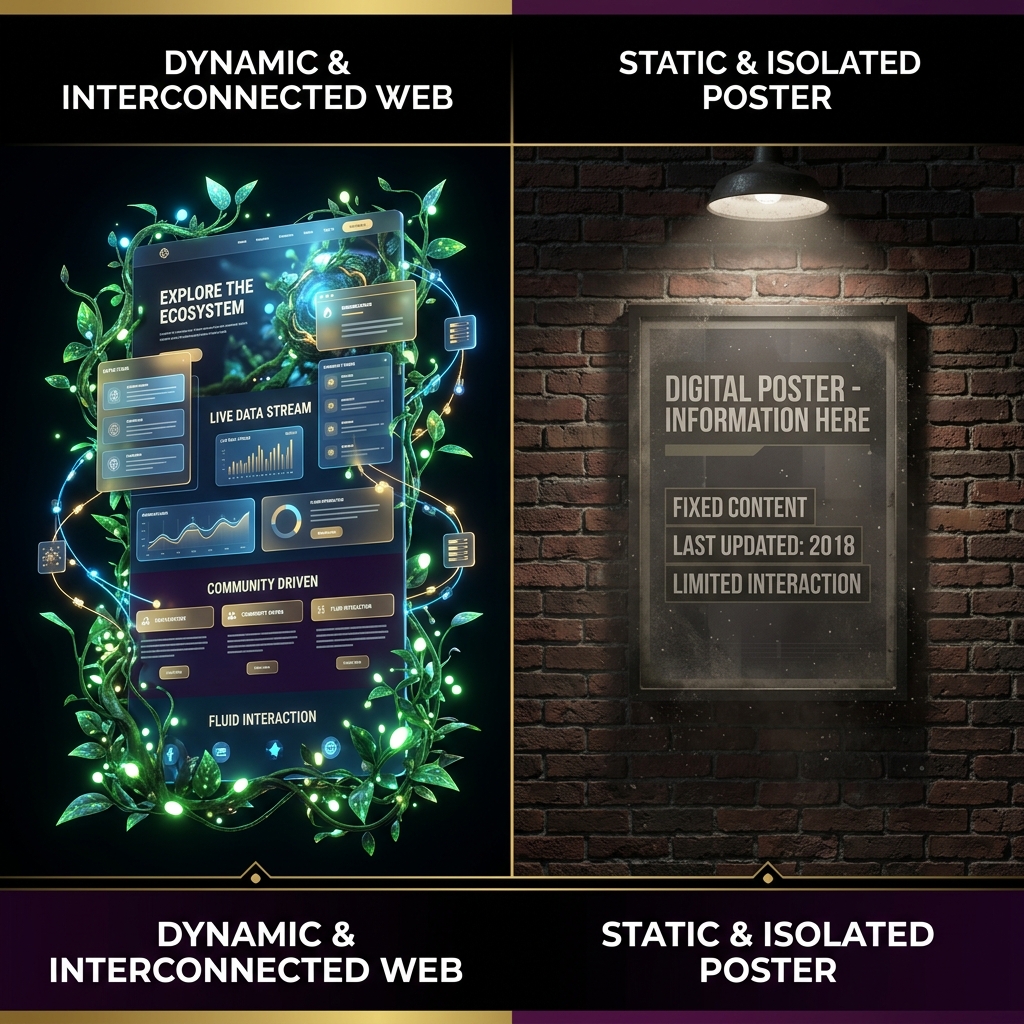
Your Website is a Living Thing, Not a Digital Poster
If you’re a business owner in South Yorkshire, chances are you’ve paid for a website, launched it, and then… left it alone. You handed out the web address like a digital business card, treating the site like a static poster pinned to a community noticeboard.
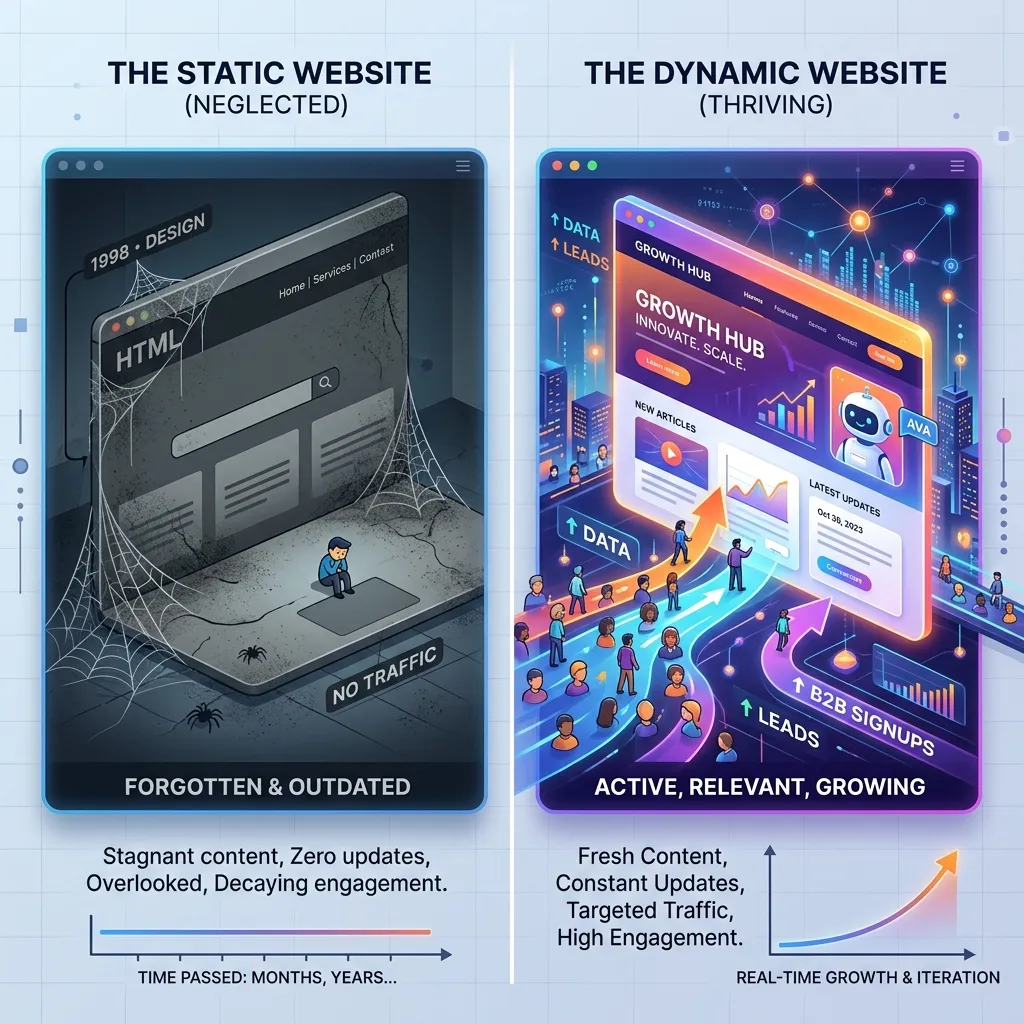
But here’s the reality in 2026: a website that doesn’t change is a website that Google (and modern AI like SearchGPT) ignores.
Search engines and Generative Engine Optimization (GEO) platforms are hungry for fresh, relevant information. They want to see that your business is active, answering real customer questions, and adapting to the local market. When your website sits stagnant for three years, you signal to these algorithms that your business is inactive.
The Digital Poster Trap A digital poster lists your services, your phone number, and maybe a few nice photos of your Sheffield or Barnsley storefront. That’s great for someone who already knows your name. But what about the hundreds of potential clients searching for the solution you provide? They won’t find your poster. They’ll find your competitor’s living, breathing website.
To drive organic growth, you have to treat your site like a living entity. It needs feeding. It needs regular updates, fresh insights, and clear answers to the questions your Northern customers are actually asking.
In the next part of this series, we’ll look at exactly how you feed your website without needing a degree in journalism—starting with why short, raw, and real blogs are your secret weapon.