The Engineering Vibe: Building NanoLog in the Age of Agentic Development
It is 2026, and the landscape of software engineering has fundamentally shifted. For those of us who spent the last decade wrestling with webpack configs, state management boilerplate, and the endless “it works on my machine” saga, the current era of “Vibe Coding” and Agentic Development feels like a different dimension.
I’m Aaron, a SaaS engineer who decided to stop fighting the tools and start orchestrating them. I recently shipped NanoLog, a 3-in-1 customer engagement suite that handles changelogs, roadmaps, and feedback widgets. But I didn’t build it the “traditional” way. I built it through high-level intent, detached code reviews, and a relentless focus on what I call the two real moats of 2026: Privacy and Pricing.
The Philosophy of “Boring” and Why It Wins
In an era where AI can generate a landing page in seconds, the value of a SaaS product isn’t just “functionality”—it’s trust. I built NanoLog with a “boring wins” mentality. This means:
- Predictable Pricing: No predatory addons or complex credit systems.
- Simple Tiers: Three tiers where all features are enabled from the start. Scaling is based solely on Monthly Tracked Users (MTU).
- Performance First: An embeddable widget that is under 17KB gzipped and uses Shadow DOM for absolute CSS isolation—ensuring it never breaks the host application’s layout.
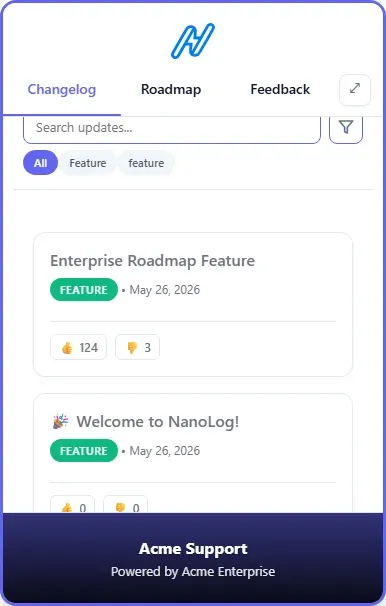 The NanoLog changelog feed embedded directly inside a host application, isolated completely using Shadow DOM.
The Privacy Moat: PII Scrubbing as a Service
One of the biggest hurdles in customer feedback is the “unintentional data leak.” When a user takes a screenshot of a bug, they often inadvertently capture PII—passwords, emails, or credit card numbers.
NanoLog solves this at the edge, before the data ever touches a server. The widget processes screenshots locally in the browser using HTML5 canvas:
- Auto-Detection: Automatically blocks elements based on type (email, phone) or pre-defined variables like selectors, class names, and IDs.
- Manual Redaction: Allows the user to manually paint black redaction blocks over sensitive areas.
- The Final Scan: Before submission, an automated PII scan runs one last time to catch anything the user might have missed.
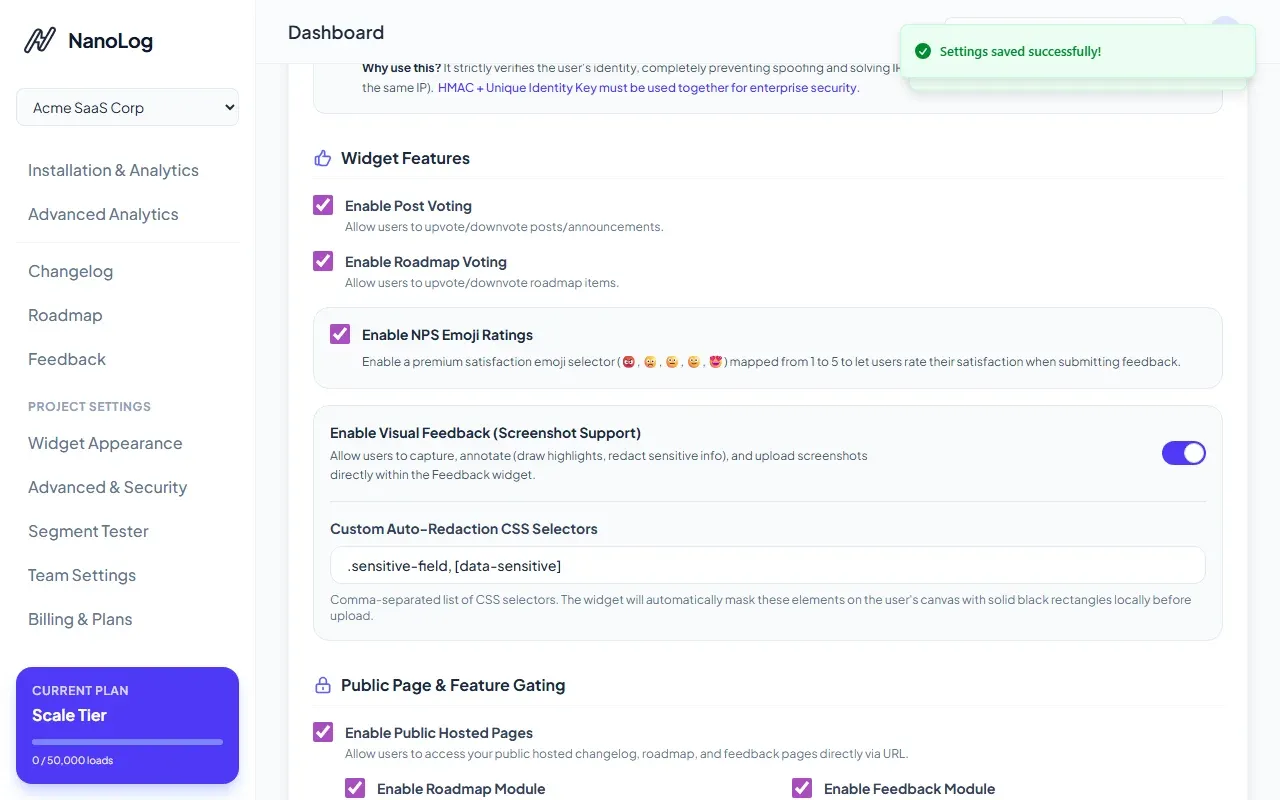 Configuring visual feedback settings, showing local PII scanning rules and cohort permissions.
Vibe Coding as a Senior Engineer
“Vibe Coding” isn’t about being lazy; it’s about shifting your cognitive budget from syntax to architecture. As a senior developer, my role has evolved into that of a System Orchestrator.
My workflow now involves:
- High-Level Intent: Using tools like Stitch (Google Lab) to prototype interactive states and then handing them off to agentic harnesses like Antigravity 1.0 and 2.0, utilizing Gemini Web for code reviews.
- Detached Code Reviews: I treat my AI agents like high-performing junior developers. They write the implementation; I spend my time in the PRs, verifying security, data engineering patterns, and ensuring the quality of the codebase remains maintainable.
- Git as the Source of Truth: Even in 2026, Git remains the bedrock. Agentic development only works when you have a rigorous version control strategy to roll back hallucinations or experiment with different architectural branches. This underpins my “let AI do its thing, just rollback if you’re not confident” loop.
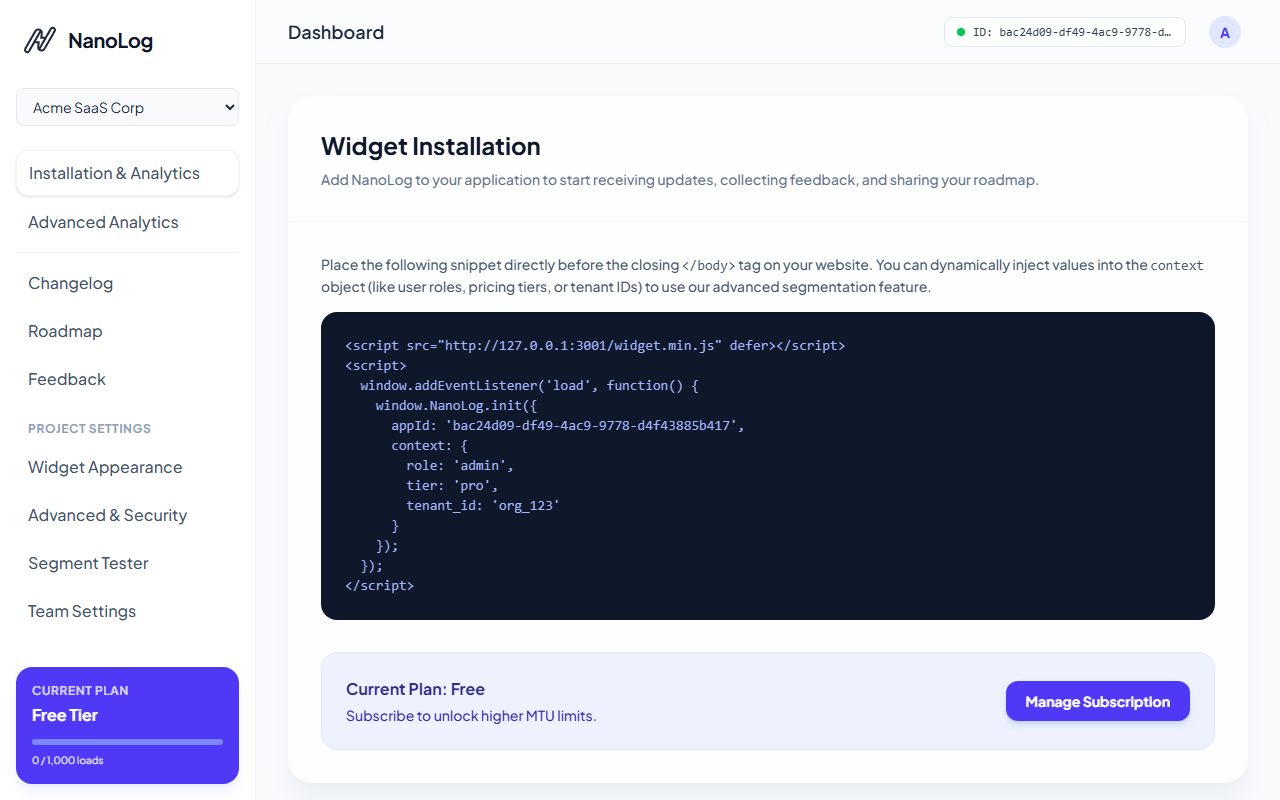
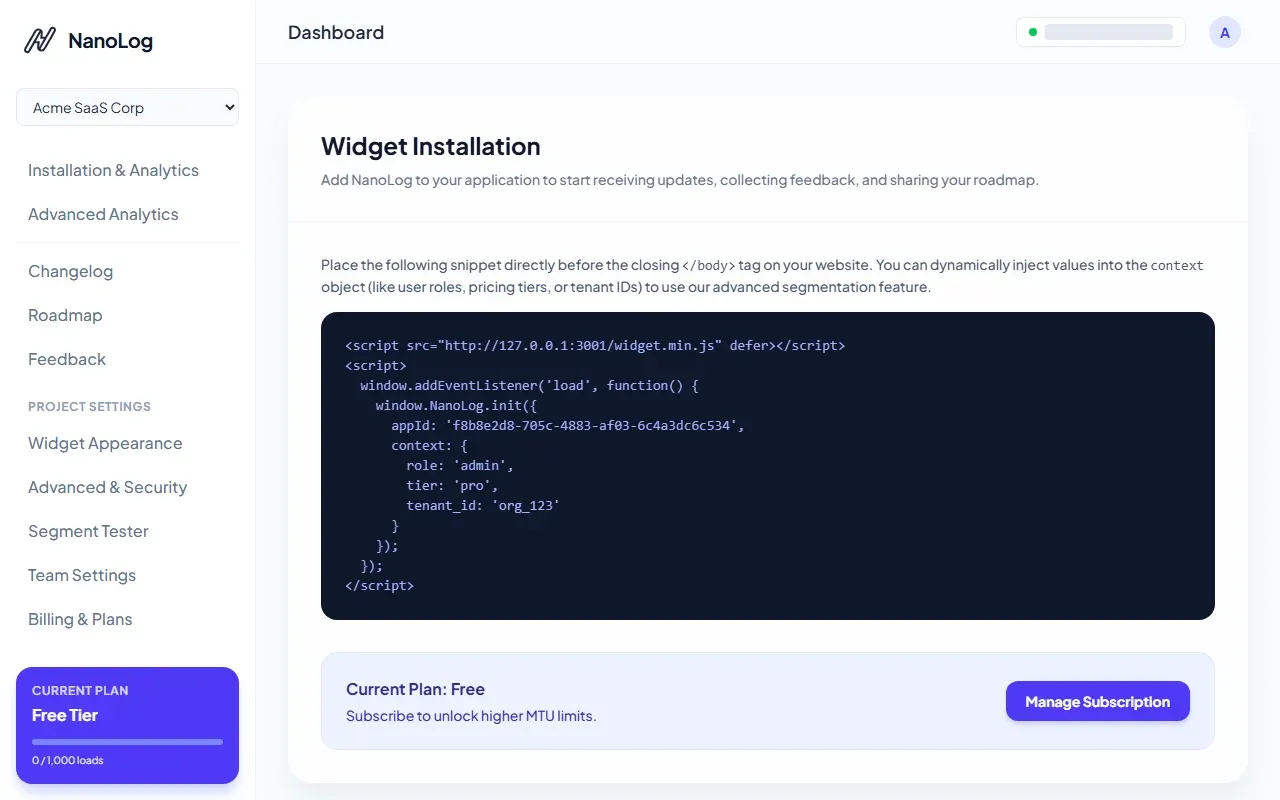 The NanoLog dashboard workspace, showing project guides and integration statuses.
What’s Next in This Series
This is the first of a multi-part series where I’ll pull back the curtain on the entire NanoLog build. Over the coming weeks, we will dive deep into:
| Post | Focus Area | Key Technical Topics |
|---|---|---|
| 01 | The Intro | The philosophy of Vibe Coding and the NanoLog vision. |
| 02 | The Tech Stack | Next.js 15, Drizzle ORM, and why PgBouncer is still essential. |
| 03 | Privacy Engineering | Deep dive into HTML5 Canvas scrubbing and Shadow DOM. |
| 04 | The Payment Choice | Why I chose Lemon Squeezy as my Merchant of Record. |
| 05 | Agentic Workflows | How to set up an AI harness for 2026 development. |
| 06 | The Launch | Moving from Alpha to Product Hunt and Hacker News. |
The goal of this series isn’t just to show you what I built, but to show you how the role of the engineer has changed. We are no longer just writing lines of code; we are designing intelligent systems.
See you in the next post.
Authored by Aaron Harpermayo on June 5, 2026.